The useful starting point
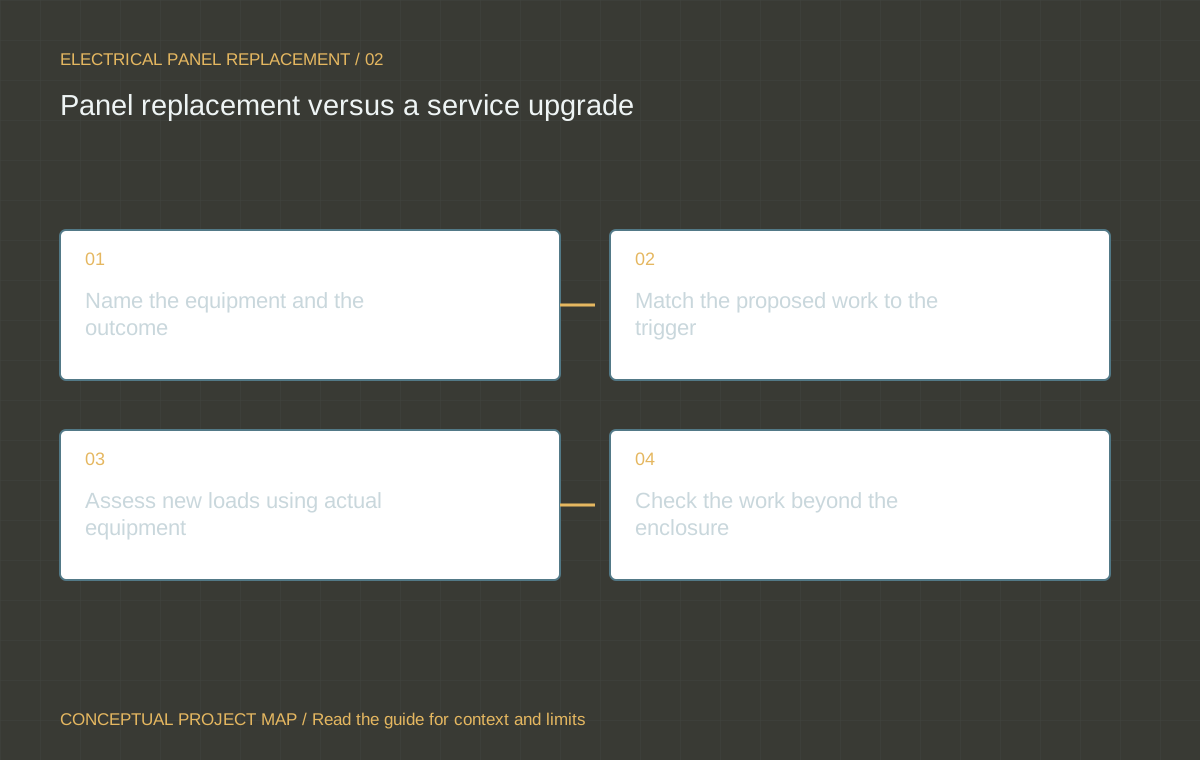
Identify the findings, retained equipment, permit responsibility, utility scope and restoration before comparing totals.
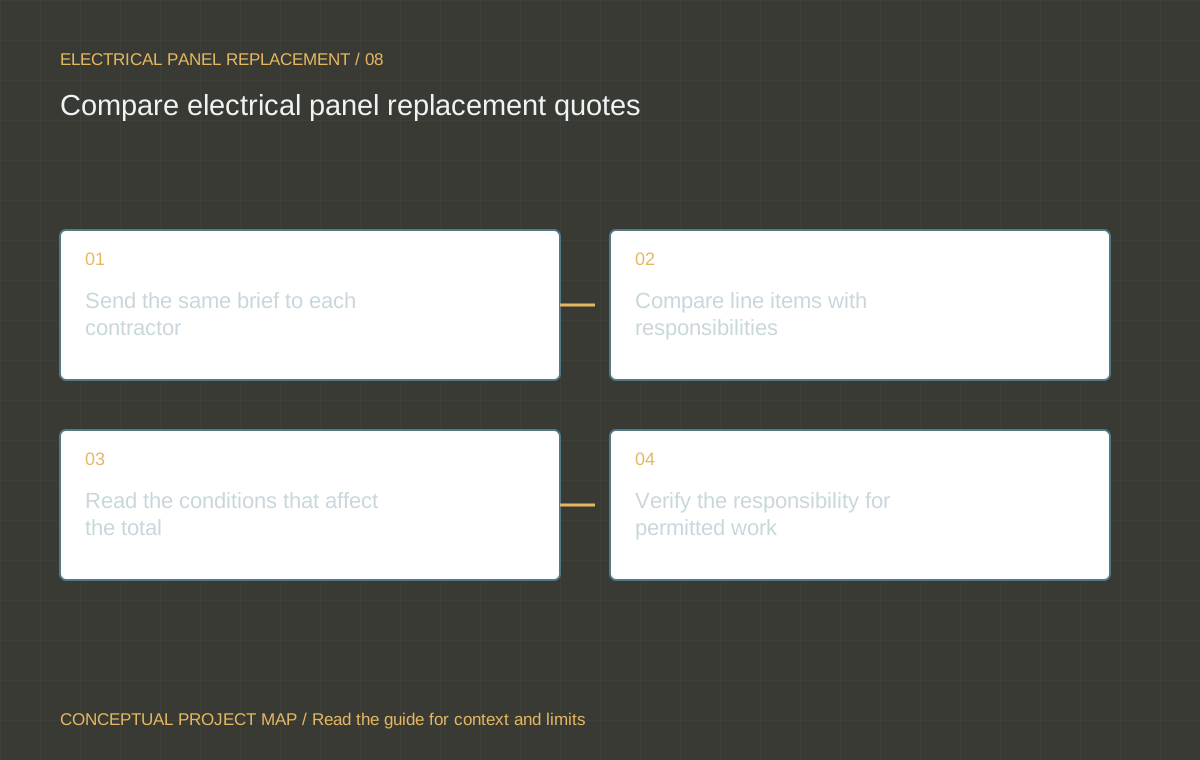
Send the same brief to each contractor
Describe the reason for replacement, known findings, intended future loads, access and desired outcome. Share the same reports and equipment specifications with each bidder. If one quote assesses only replacement and another includes a capacity increase, they are pricing different outcomes.
The scope builder produces an owner brief, not a specification for installation. Let qualified contractors establish the suitable technical solution and explain its basis.
Compare line items with responsibilities
Look for replacement equipment, retained equipment, circuit corrections, new circuits, permits, inspection arrangements, utility work, outage coordination and restoration. Identify allowances and exclusions. Ask who supplies each required record and who authorises discovered work.
A stated total can hide important differences. One proposal might leave drywall repair to the owner; another may include it. One may assume an unchanged supply; another may require an additional utility estimate. Keep those distinctions beside the prices rather than normalising them away.
Read the conditions that affect the total
Ask whether routes and circuit identification have been investigated. Identify concealed-work assumptions, utility dependencies and equipment substitutions. Agree a written variation process that records findings and owner authorisation before additional work proceeds, except where immediate safety response requires action.
Request scheduling assumptions, payment stages and warranty terms. This site publishes no invented installed-price range. Project-specific scopes and actual contractor proposals are the appropriate basis for comparison.
Verify the responsibility for permitted work
Ask who holds the permit and which authority issues it. The Safety Codes Council describes master electrician permit responsibilities. Confirm any additional local business requirements directly with the contractor and municipality.
Do not interpret a HAUSE enquiry as a certification, endorsement or guarantee of a contractor. Obtain appropriate credentials, insurance information and references through your ordinary contracting process and verify claims rather than repeat them.
Make completion an item in the quote
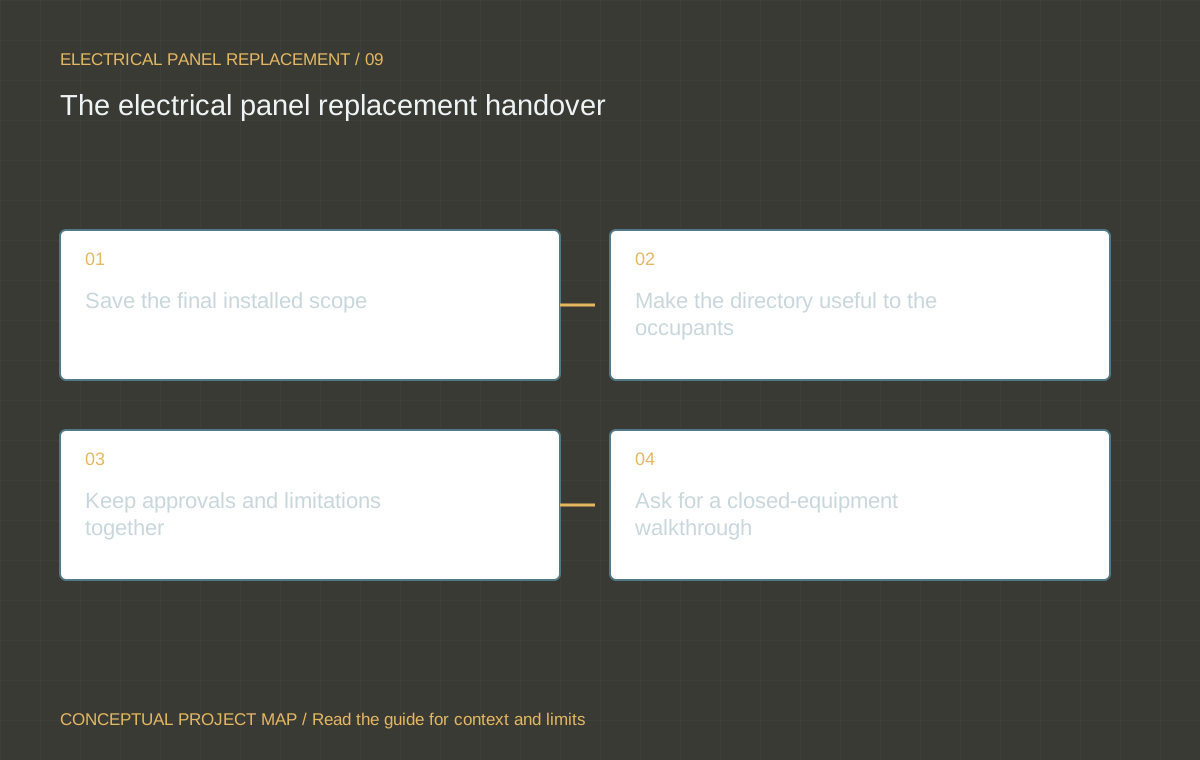
Include the accurate circuit directory, relevant inspection outcome, equipment documents, settings and unresolved-item list. If capacity changed, ask for the final supplied arrangement. If it remained, ask that it be recorded. Keep condition findings distinct from future-load assessment.
The handover guide makes the final records reviewable. Do not approve a technical design based only on this comparison checklist; use a qualified contractor and the applicable authority.
Questions / Direct answers
Common questions
Why is the cheapest quote sometimes hard to compare?
It may omit utility work, circuits, access, restoration or completion records. Compare scope before totals.
Should utility work be in the contractor quote?
Its responsibility and current cost status should be explicit, whether included, allowed for or priced separately.
Can this site verify a contractor automatically?
No. An enquiry does not establish qualifications, insurance, availability or project approval.
References / Jurisdiction matters
Sources & further reading
Confirm the actual location, permit authority and equipment instructions before relying on a requirement. A source from another jurisdiction is identified for context.
- About master electriciansSafety Codes Council · 2026-10-07
Do not open equipment, handle refrigerants or work on energized systems. Permits, qualified trades and inspection requirements vary by location. This guide does not design an installation or certify existing equipment.