The useful starting point
Make critical loads, access, communications and delays visible before the shutdown is booked.
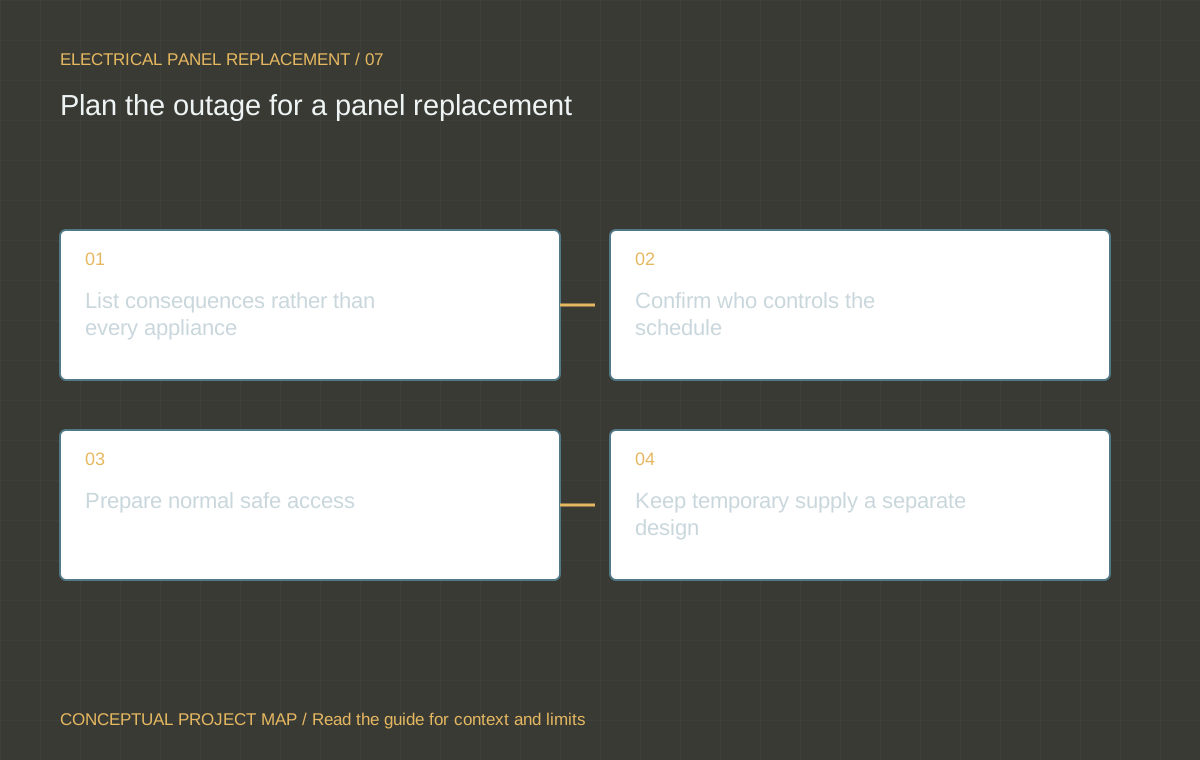
List consequences rather than every appliance
Record what loss of power interrupts: medical needs, winter heat, refrigeration, communications, business work, powered access and security. Include people who may be present during the work and any need to leave the property. Give this list to the contractor before a shutdown window is agreed.
For medically important equipment, arrange appropriate contingency directly with the care provider and responsible equipment supplier. This library cannot prescribe backup duration or a medical safety plan. Do not rely on a generic contractor outage estimate for that decision.
Confirm who controls the schedule
Ask whether utility work, inspections and contractor work have separate bookings. Record which steps are confirmed and which remain conditional. An appointment for one party does not establish readiness of every party needed to complete the project.
Request a communication plan for changes: who contacts the owner, who speaks with occupants and who updates the expected return-to-use time. A short written schedule with dependencies is more useful than a promise of a universal same-day replacement.
Prepare normal safe access
Tell the contractor about pets, gates, parking, locked rooms and shared entrances. Arrange access to affected areas. Keep required equipment access unobstructed without touching or moving electrical components. Discuss whether another trade is working in the same area.
Record powered doors or access systems that may behave differently when electricity is unavailable. Ask the responsible installer for appropriate operating instructions. Do not wait until shutdown to discover that a key, code or manual access procedure is unavailable.
Keep temporary supply a separate design
A temporary supply arrangement needs suitable equipment and a qualified plan. Never connect a portable generator to building wiring through an improvised outlet arrangement. Do not assume a consumer UPS can supply devices beyond its instructions and rating.
If temporary power is required for the project or business operations, state the loads and ask who designs, installs and removes it. Include its cost and approvals where applicable. The temporary arrangement should not become an undocumented permanent workaround.
Agree how the property returns to use
Ask what the contractor checks after re-energization and what the owner should observe without opening equipment. Include systems with settings or restart procedures. Confirm how an unexpected remaining issue is reported and documented.
Retain the actual shutdown and return-to-use record with the final scope. Use the handover guide to distinguish an operating installation from a completed documentation package.
Questions / Direct answers
Common questions
Can the outage duration be guaranteed from a website?
No. The actual scope, utility, inspections and discoveries affect timing; obtain the project estimate and contingency.
Can I backfeed the house from a portable generator?
Do not improvise a building connection. Backup and temporary supply need suitable equipment and qualified assessment.
Who should know about a planned shutdown?
Tell everyone responsible for occupants, critical equipment, access and operations, using the agreed project communications plan.
References / Jurisdiction matters
Sources & further reading
Confirm the actual location, permit authority and equipment instructions before relying on a requirement. A source from another jurisdiction is identified for context.
- Electrical safety — basic informationCanadian Centre for Occupational Health and Safety · 2026-10-07
Do not open equipment, handle refrigerants or work on energized systems. Permits, qualified trades and inspection requirements vary by location. This guide does not design an installation or certify existing equipment.