The useful starting point
The equipment serving your unit may depend on common infrastructure. Resolve ownership, permissions and affected occupants before contracting.
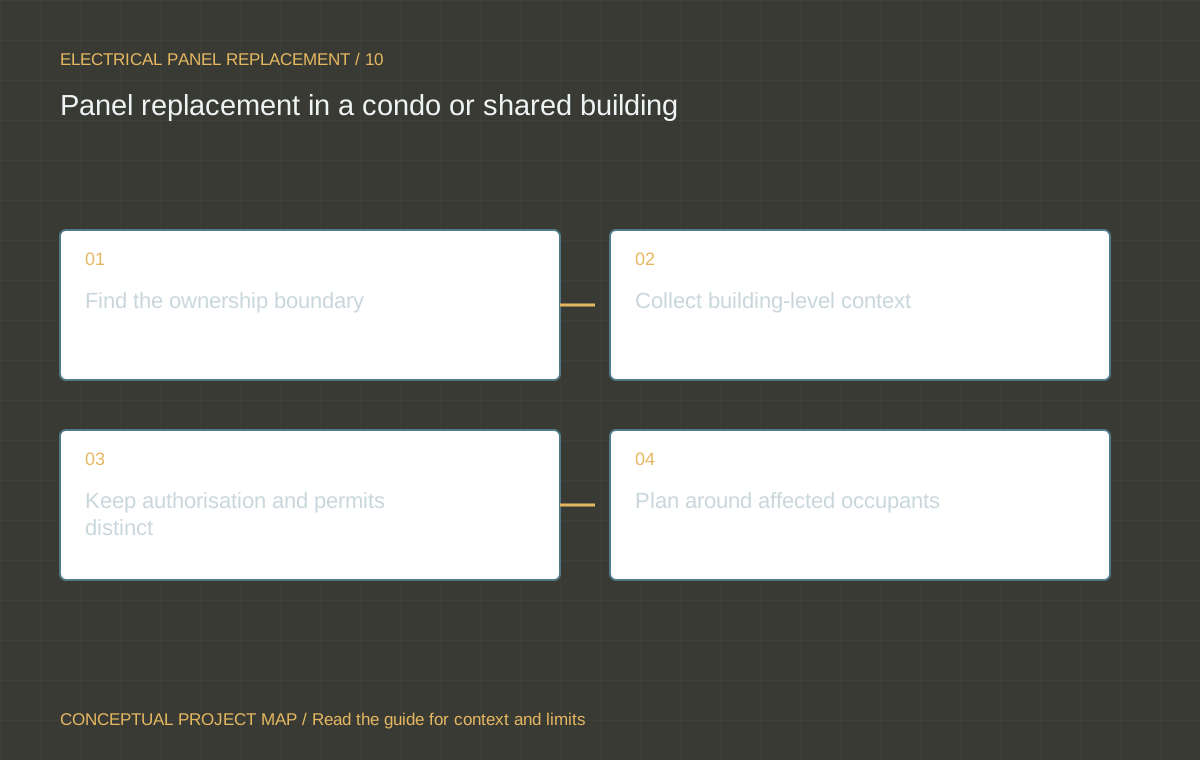
Find the ownership boundary
Ask the property manager or board to identify what belongs to the unit and what is common equipment. The visible panel inside a unit is only one part of the supply arrangement. Do not assume the unit owner can authorise changes to shared equipment, rooms or routes.
Use the building's governing documents and current management process. This guide provides technical planning questions, not legal interpretation of a condominium's ownership boundaries. Get professional advice where authority or responsibility is unclear.
Collect building-level context
Request available electrical drawings, previous assessments, unit alterations and relevant shutdown rules through the responsible manager. Mark missing or outdated records. A contractor should know whether the proposal depends on common distribution or a shared supply capacity.
Ask the electrician to distinguish unit equipment condition, shared-equipment limitations and future load assessment. A new unit panel does not independently establish capacity for an EV, heating change or other new equipment.
Keep authorisation and permits distinct
Board permission and an electrical permit answer different questions. Obtain both pathways as required. Calgary publishes shared-housing and homeowner restrictions, while Edmonton lists different homeowner eligibility limits. Confirm the actual address and building arrangement.
Ask who may sign the contractor scope, who obtains permits and who coordinates access to common rooms. Do not let an owner enquiry silently substitute for the building's approval process.
Plan around affected occupants
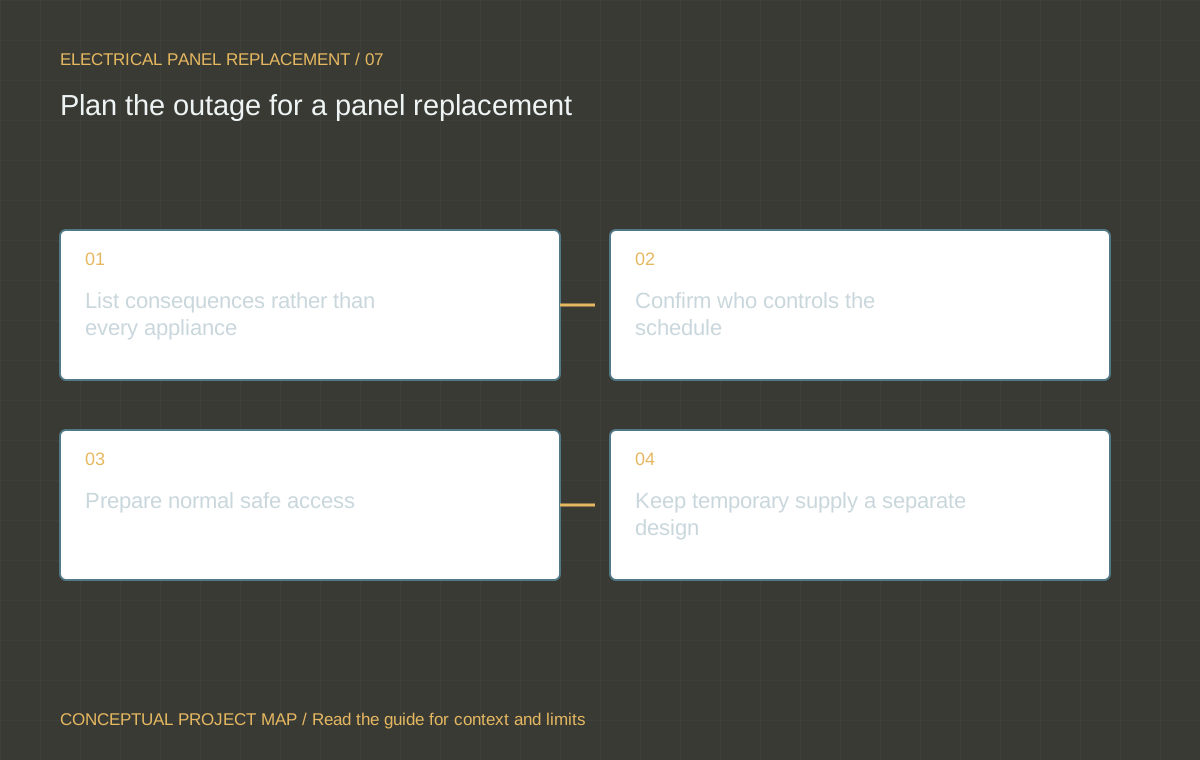
A shutdown can affect more than the requesting unit. Identify the actual impact with the contractor and manager before notices are issued. Coordinate elevators, access systems, business operations and other critical services where applicable.
Agree notice responsibility, working hours, access and delay communications. Avoid promising unaffected service to other occupants until the actual shutdown arrangement is established. Any temporary supply needs a qualified plan.
Return records to the building
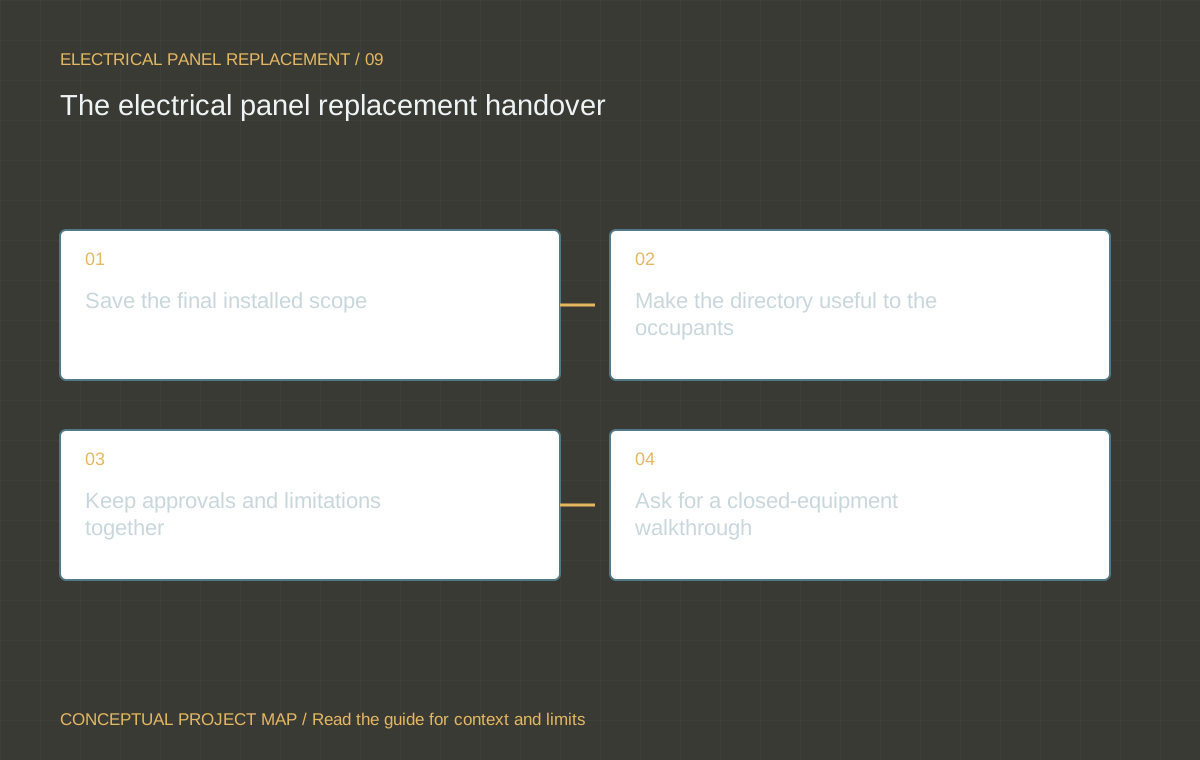
Provide final drawings or scope information required by the manager, equipment records and applicable inspection outcomes. Update the building's record of unit alterations. Keep owner-operating instructions separate from common-equipment maintenance responsibilities.
Use the scope builder to collect known facts and unresolved permissions. Qualified people must assess the equipment and perform electrical work; keep common electrical rooms and panels under their established access controls.
Questions / Direct answers
Common questions
Can I increase my condo unit service by replacing its panel?
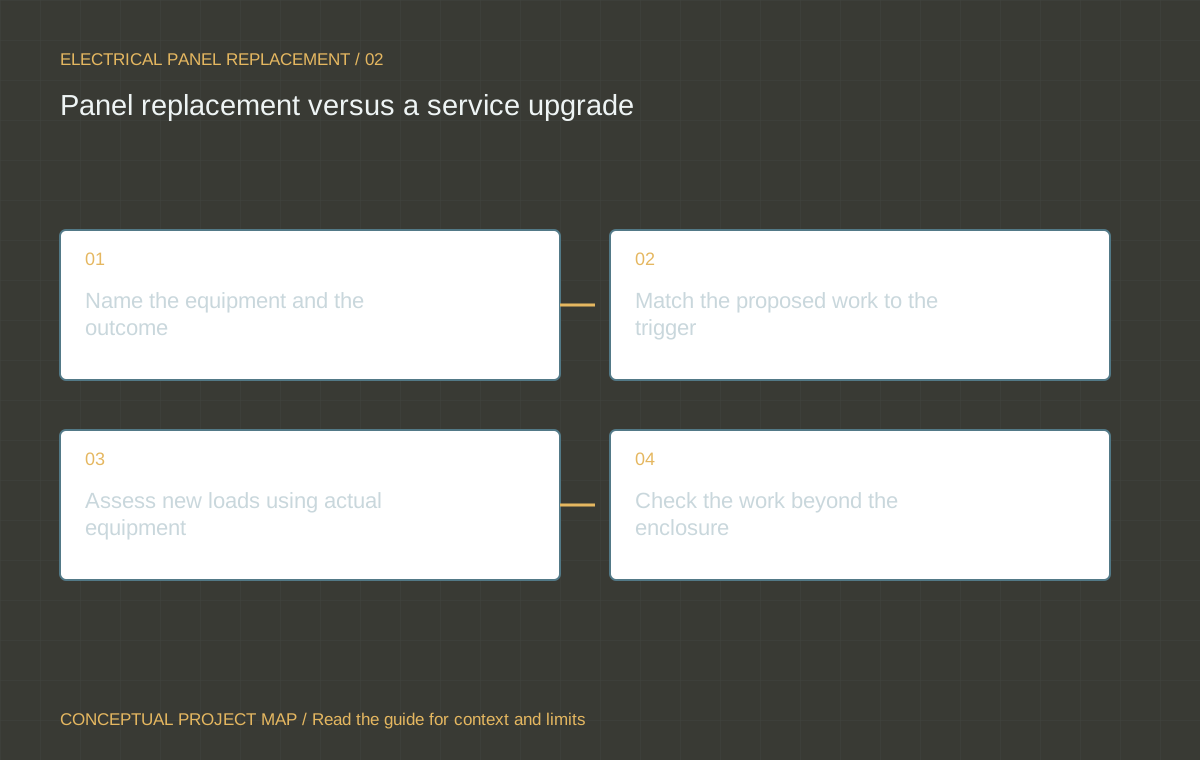
The complete shared arrangement and applicable approvals must be assessed. A panel replacement alone does not establish more supply.
Does board permission replace an electrical permit?
No. Ownership authorisation and technical permitting are different requirements.
Who needs the final project records?
Keep the owner documents and provide the building manager the alteration records required by the building process.
References / Jurisdiction matters
Sources & further reading
Confirm the actual location, permit authority and equipment instructions before relying on a requirement. A source from another jurisdiction is identified for context.
- Homeowner electrical and plumbing permitsCity of Calgary · 2026-10-07
- Electrical permits — residentialCity of Edmonton · 2026-10-07
Do not open equipment, handle refrigerants or work on energized systems. Permits, qualified trades and inspection requirements vary by location. This guide does not design an installation or certify existing equipment.