The useful starting point
Visible drying or cleaning does not establish electrical suitability. Coordinate the electrical findings with restoration and insurer records.
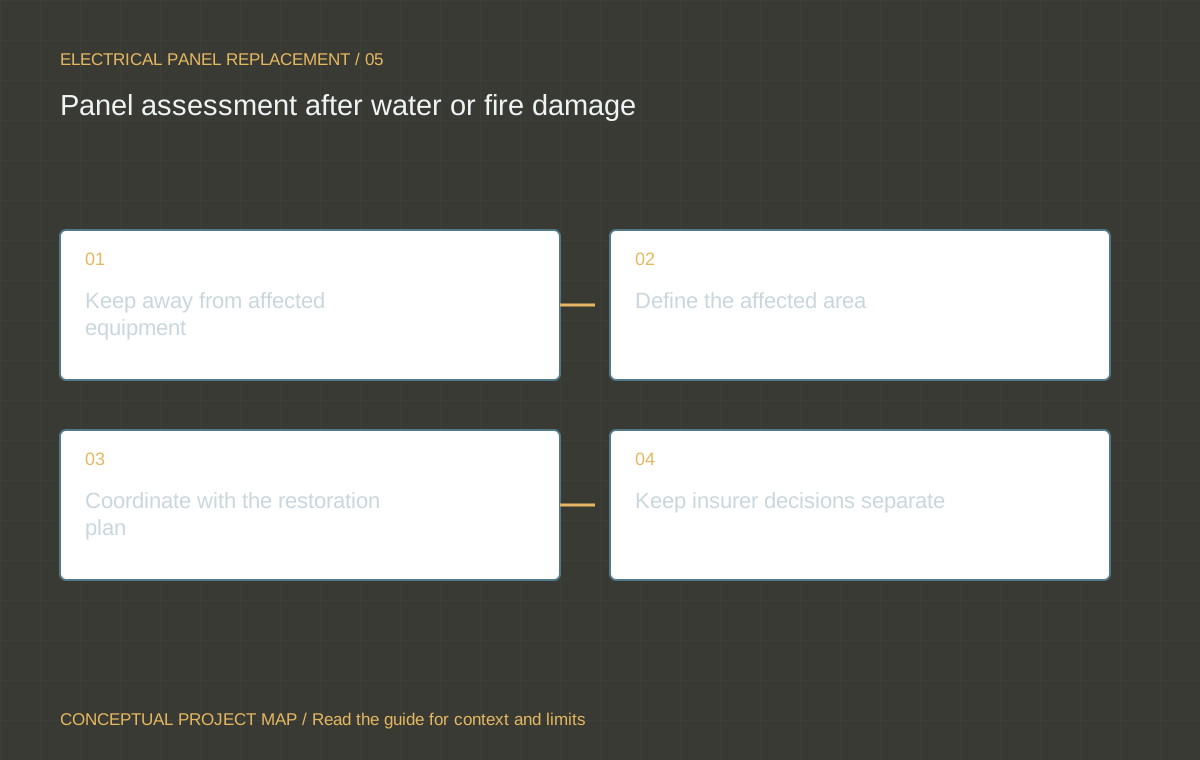
Keep away from affected equipment
Water and fire events can affect electrical equipment beyond what an owner can see. Do not approach suspect equipment, remove covers or attempt to restore power. Where there is immediate danger, move away and use emergency services. Follow the responsible utility and qualified professionals' directions.
Photographs and insurance records can be collected only from a safe location. Restoration scheduling must not pressure someone to energize equipment before the appropriate assessment. An enquiry form is a planning channel, not emergency response.
Define the affected area
Give the electrician the event history: source and extent of water, fire area, restoration work, shutdowns and any known contamination. Distinguish observed exposure from suspected exposure. Ask which equipment, circuits and devices must be assessed, not only whether the panel enclosure can be replaced.
Alberta's electrical standards page links guidance on water- and fire-damaged equipment. Have the contractor consult the applicable manufacturer and technical guidance for the actual equipment. The page is a gateway, not a blanket approval to clean or reuse a product.
Coordinate with the restoration plan
Identify areas that will be opened, cleaned or rebuilt. Agree on electrical access and inspection stages before finishes are restored. If damaged circuits or equipment remain outside the electrical proposal, have that limitation recorded so the restoration scope does not silently conceal them.
Ask who handles temporary power where needed and how it is assessed. Temporary restoration equipment and permanent re-energization are different tasks. Do not use ad hoc generators, extension-cord chains or backfeeds as an owner solution.
Keep insurer decisions separate
Request the insurer's exact documentation requirements and route professional reports through the claim process. An electrical assessment supports a technical decision; it does not establish coverage or responsibility for costs. Avoid treating an adjuster's initial scope as an electrical approval.
Keep itemised retained, repaired and replaced equipment in the record. If investigation is incomplete, preserve that status. A damaged-building project may progress in stages; later findings should remain traceable to the original event and assessment.
Document the return to use
Request the agreed test and inspection documentation, equipment decisions and any remaining restrictions. Coordinate a final owner handover with restoration completion. A working light is not evidence that all affected equipment has been assessed.
Read the handover guide for the durable record and the disruption guide for planning. Suitability and energized work belong with qualified people.
Questions / Direct answers
Common questions
Can a wet panel be reused once it dries?
Dry appearance does not establish suitability. The actual equipment needs qualified assessment using relevant guidance.
Is a panel replacement enough after a flood?
Exposure can affect circuits, devices and other equipment. Ask for the complete affected-area scope.
Does an insurance scope approve the electrical installation?
No. Insurer coverage and electrical assessment are different decisions.
References / Jurisdiction matters
Sources & further reading
Confirm the actual location, permit authority and equipment instructions before relying on a requirement. A source from another jurisdiction is identified for context.
- Electrical codes and standardsGovernment of Alberta · 2026-10-07
- Electrical safety — basic informationCanadian Centre for Occupational Health and Safety · 2026-10-07
Do not open equipment, handle refrigerants or work on energized systems. Permits, qualified trades and inspection requirements vary by location. This guide does not design an installation or certify existing equipment.